Sunday, 11 September 2011

Research - Thriller Character Creation

Name: Michael Cronin
Age: 20
Date of Birth: 5th of November 1991
Height: 5ft 11ins
Weight: 11st 10lbs
Hair Colour: Dirty blonde, greasy as he does not take pride in his personal appearance.
Eye colour: As green as the fields of Ireland
Profession: Currently unemployed
Relationships: He is a loner, separated from his peers due to his strict religious views, the other kids didn’t really understand him and he hasn’t developed the necessary skills to form relationships as an adult.
Michael was heavily influenced from a young age by his elder brothers, all of whom were supporters of the IRA, however none of them suffered from the same affliction as Michael.
Religious Views: Michael is a religious extremist; a catholic.
General appearance: He’s badly dressed in scruffy clothing, which hang loosely off of him, as though they belonged to an elder brother before him, which he never grew into. His large green hoody is in support of the Cork Republic, showing his anarchist tendancies.
He is unshaven, his beard ragged and bushy; his hair hangs limply, grease sticking pieces together. His general features are nothing out of the ordinary, a slightly long nose, thin lips and pale skin. His eyes however are the exception; they are a dark green, cold and unfeeling, often narrowed to any who should look at him.

Style of Speech: He speaks with a strong, southern Irish accent, a deep voice with bitter undertones.


General information
Michael has a hero complex, which, when coupled with his religious extremism, creates the monster that he is. He thinks that he is going to be a hero because he is “sacrificing himself” for the cause. He wants to be part of the IRA but he doesn’t agree with the Good Friday agreement and so has taken things into his own hands. He has seen the 9/11 attacks and the 7/7 bombings and thinks that suicide bombing must be the way forward as that is what other terrorists around the world are doing.
Although he identifies with them he does not see himself as a terrorist but instead as a solider. He feels as though there is an unspoken war between Britain and Ireland as to who claims Northern Ireland and thinks that action needs to be taken in order to progress the situation and reunited Ireland.
In his suicide note he is not really apologising for killing civilians, he seems to make an attempt to, but justifies their deaths as collateral damage. However he is asking for forgiveness for committing suicide as he holds strong catholic values which would forbid him from doing so.

Similar Products - Misery Characters

Misery, based on the bestselling novel of the same name by Stephen King, is about a writer called Paul Sheldon. After finishing his latest novel he goes out for a drive but crashes where upon he is rescued by Annie Wilkes. Annie is an ex-nurse who looks after Paul whilst he gets better. It transpires that Annie is not really looking after Paul for the good of his health, but because she is in love with his novels and seems to be obsessed with Paul himself. The film is then about Paul trying to escape and Annie forcing him to rewrite the novel that he had finished at the beginning of the film because she isn’t like the foul language and the fact that Paul kills off Misery, the main character.
When Paul finishes the new Misery book, as a celebration, he asks Annie for a cigarette and a match, as is his normal routine after finishing a book. He uses the match to seemingly light his manuscript on fire, but actually sets fire to a stack of notes with the Misery title page on top.
This then leads to a fight between the two main characters, ending with Paul killing Annie.
At the end of the film although Paul is alive and well he is not over the trauma inflicted upon him as he hallucinates, seeing Annie wherever he goes.

Key Character Traits


Annie Wilkes

In the beginning of the film Annie comes across as a kind and caring woman who is deeply religious. She rescues Paul from the snow and seems to be taking care of him. After reading his new book she turns nasty and violent, which is a very sudden change of persona. Perhaps from this we can assume that the nice person image is just a façade. She is clearly suffering from mental illness which could have been induced by living alone for so long and is then used to having things her own way, except taken to extremes.  
I would suggest that Annie is suffering from Münchhausen by proxy syndrome,which is where one purposefully makes another person, often somebody close to person suffering from Münchhausen's,ill/helpless so they can then care for them. Disabling Paul is clearly a sign that she is a sufferer of Münchhausen's as he is then less likely to escape her and she will then have to care for him forever. 

She is obsessive which is shown throughout the film. She is completely devoted to Paul’s Misery series; she even calls her pet pig Misery after the main character in the novel! She is so in love with the character and her story that she appears to have forgotten that the novel is just a work of fiction and when she finds out that Paul has killed of Misery she appears to take it as a personal insult and forces Paul to rewrite the novel.
During an escape attempt, Paul finds a scrapbook of newspaper clippings about his disappearance and Annie's past, discovering that she was suspected and tried for several infants' deaths. This shows her
obsessive tendencies as she has gone through newspapers and saved articles about the people she's killed. She is clearly mentally unsound and is a danger both to herself and to others around her and really she ought to be sectioned.

Strong willed. Annie certainly knows what she wants and she will stop at nothing to achieve her aims. She wants Paul to rewrite his book; so she burns the old copy and forces him to rewrite it. She wants Paul to stay with her forever; so she disables him, and so on and so forth. This makes her particularly dangerous as she would resort to murder if that was the only option left, as indeed she does at the end of the film when she attempts to kill Paul so that they can be together forever.


As with most antagonists in the thriller genre, Annie is powerful. She has control over Paul as he cannot escape from her house and s previously stated she will stop at nothing to achieve her ends. Her ability to act like a nice and caring person means that she can fool the authorities into thinking that she lives alone and knows nothing about Paul or his disappearance when they come looking. The combination of these two traits makes Annie a very sinister character.


Morality appears to have eluded Annie as she pretends to be a devote christian but then has no qualms about murder which don't really go together. I think that her mental illness is what makes her lack morality and perhaps if she were able to combat the illness her sense of morality would be restored to that of an ordinary human being.

  • Obsessive
  • Psychotic
  • Aggressive
  • Selfish 
  • Lonely
  • Powerful

Paul Sheldon

Paul is a very calm person and handles the highly stressful situation of being held captive by Annie with a very level head. He plots his escape attempts carefully and is often compliant with Annie's wishes which shows his intelligence. Had he have been less intelligent he may have been less subtle about his escape plans and Annie may have killed him. 

Paul is a generally nice and good person as in the beginning although he is clearly a bit disturbed by Annie's obsessive behaviour (she tells him that she's his number one fan very excitedly) he is nice to her and offers her his completed manuscript to read. This is a nice gesture showing that he is polite as under ordinary circumstances, offering a fan a chance to read his latest novel before it was published would have been a wonderful thing to do!

Like Annie, Paul is also a very strong minded person. He never gives up as resigns to his fate as Annie's hostage, he is always trying to find some way to escape her clutches. From this we could then perhaps assume that Paul is an optimistic person as he must believe there is a chance for him to escape or else it would be unlikely that he would keep trying to do so.

I think Paul holds the same general morals as any average person, in that, he would never dream of, nor wish to, kill another human being but when put in a situation of kill or be killed Paul chooses the former, as I'm sure  would most people.
  • Calm
  • Polite
  • Intelligent
  • Morally Good
  • Strong Willed
  • Optimistic
  • Resourceful - In that he does not have much to work with but he manages to create a lock pick for himself, amongst other things.

Similar Products - Protagonist -vs- Antagonist


The 2011 film ‘The Guard’ is a hybrid thriller film, as it is a Comedy/Thriller, and thus it presents us with the seemingly unconventional protagonist, Sergeant Gerry Boyle. 

Protagonist


Sergeant Boyle is an unconventional Gard in Galway, Ireland who, over the course of the film, helps to stop a major drug smuggling operation. With protagonists in thrillers one is often uncertain as to whether they are a ‘good’ character or not, for example, in the image below we see Sgt. Boyle taking LSD which he has taken from the dead body of the car crash victim. He has taken the drugs away because he doesn't think 'your [refering to the dead boy] mammy would be too pleased to hear about this'. Therefore he is in fact doing the dead boy a favour by getting rid of the evidence however should he really take away evidence in the first place? Shouldn't he have just thrown it all away rather than take any of it if he felt duty bound to dispose of it?


This could then lead the audience to think that he is a corrupt police officer, which to an extent he is, however at the end of the film he is fighting the drug smugglers with only Wendell from the FBI as his back up because the rest of his unit were taking backhanders from the drug smugglers.

The protagonists in thrillers are often morally grey as the often commit crimes ranging from drug taking to murder. In ‘The Guard’ not only is Boyle a drug trying Gard but he’s racist, very politically incorrect, sleeps with prostitutes and yet the audience still likes him.

From my research, I would venture to suggest that most protagonists in Thrillers are quick thinking, if not above average intelligence. In ‘The Guard’, Boyle would appear to be rather stupid however it is he who suggests to Wendell, who is the investigating FBI officer, that they check the CCTV footage in the local pub and finds the drug smugglers they’ve been looking for. Throughout the film he is able to produce valuable information for the FBI and proves that he is a valuable asset to the operation. Perhaps, Boyle acting stupidly is actually just a cover so that no one suspects him of actually being able to do his job exceptionally well.    


As he is a man, this automatically makes him a more likely Thriller protagonist, as the protagonist role is primarily a male role. In more recent years there have been more female protagonists in the Thriller genre but in general they are mostly male.

In general the protagonists in thrillers seem to have problems with relationships. For example, James Bond has a different girl every film and seems to be unable to start a meaningful relationship with any of them (with the exception of On Her Majesty’s Secret Service where he gets married at the end of the film but she is subsequently killed). Other examples of recent thriller protagonists with troubled relationships include: Jason Bourne (the Bourne series), Nina Sayers (Black Swan) and Cobb (Inception).
Sergeant Boyle is also a man with relationship problems, he says himself that he’d like to settle down but he’s too busy, “whoring it around”.
In addition to this if the protagonist does become attached to another person they are often killed one way or another: Cobb’s wife Moll in Inception, Vespa in Casino Royal and Sergeant Boyle’s mum in The Guard.

Antagonists
The antagonists in The Guard are a group of drug smugglers, Liam O'Leary, Francis Sheehy and Clive Cornell. Criminals are often featured in thrillers and not just in their own sub-genre of crime thriller. However, criminals in thriller films can appear as the protagonist in one film and an antagonist in another. For example, in RocknRolla, the 2008 film by Guy Ritchie, all the major characters were criminals, some were good and others were bad.


A common personality feature of antagonists tends to be that they are intelligent. This is certainly true of the group of antagonists in The Guard as they are interested in philosophy and quote famous philosophers throughout the film. The fact that they are criminals and interested in philosophy is strange and would be considered abnormal. Abnormalities in the antagonist is conventional within the thriller genre, for example, The Joker in Batman doesn't just cut scars into people's faces, as if that wasn't bad enough, he does it with a potato peeler.

They are manipulative as they bribe the Connaught gards so that they will turn a blind eye to the drug smuggling and they try to kill Gerry Boyle when he refuses to comply with their wishes.

Often the antagonist has some sort of mental disorder, Annie in Misery, for example, displays signs of having Munchhausen syndrome. In The Guard, O' Leary asks why it is him that has to kill Sgt. Gerry Boyle and is told by Cornell it's because he's a psychopath, to which O' Leary responds with, "I'm a sociopath not a psychopath, they explained that to me at Mountjoy".
Being a sociopath is really no better that being a psychopath but it does show that he is mentally unstable as he spent time in Mountjoy which is a large prison in Ireland, implying that he's been to prison for committing other sociopathic crimes before.

Although the drug smugglers are clearly the primary antagonists of the film, it could be suggested that the bend police force that Sgt. Boyle works for are secondary antagonists as they fit the role by representing a threat or obstacle to Sgt. Boyle by covering up the drug smuggling operation and feeding Wendell false information.


Similar Products - Thriller Timeline

https://docs.google.com/present/edit?id=0AZMRDGmMNFjWZDZqdmh0Nl8yZHRtNjJkZ20&hl=en_US

Wednesday, 7 September 2011

Similar Products - Character Analysis

Cherrybomb  - Luke

Luke (played by Robert Sheehan) is one of the major characters in the 2009 Drama/Thriller 'Cherrybomb'.

The first shot we see of Luke, he is smoking in his room. This shot depicts him as quite a laid back person with little to no responsibility. However as the film progresses we discover that Luke has a lot of responsibility as he is the primary carer of his drug-addicted father.


One of the first things you notice about Luke's personality is his childish behaviour. In this scene (below) we see Luke and Malachy talking about Michelle, whom they have just met and both fancy, and Luke says that he gets to go out with her instead of Mal because he "baggsied her".

His immaturity can also be shown at the end of the clip when Malachy's mother goes into Mal's room to give him his results. When Malachy's mother hugs Mal, Luke becomes slightly agitated and tells him that he 'hasn't got all day'. This reaction suggests that Luke is jealous of what Mal has, which is, a loving and caring family. As we find out later on in the film, Luke lives with his Dad in a house rented from his brother. Luke has to take care of his father and try to keep him off the drugs whilst his brother doesn't care for him either as he only seems to see Luke as part of his workforce.
As well as the immature comments, Luke also pulls immature stunts to gain the attentions of Michelle, for example, when Michelle, Mal and Luke go to the club, Luke joins in a fight between his Dad and the bouncers to show off in front of Michelle.
All of this put together would suggest that Luke acts out and craves attention because he isn't loved enough and hasn't been looked after properly. Therefore he has two ways of coping with his situation; to give up and become a gibbering wreck or pretend to be normal which makes him appear over confident and cocky to hide his vulnerability.

In terms of Character theory analysis, Luke is a prime example of 'The Trickster' in Campbell, Fletcher and Greenhill's Character theory as he behaves comically whilst actually having many complex problems.
I would also venture to suggest that Luke behaves in an aggressive manner and has violent outbursts because he is angry with his situation in life: no mother, has to care for a drug addicted father and his brother treats him as a worker.
His aggressive outbursts early on in the film foreshadow his attack on Michelle's father at the end when he is trying to defend Mal.

Morals and ethics

In terms of morality it is hard to tell how moral Luke is. When he hits Michelle's father, who is punching Mal to death, over the head with a pipe the first hit is to save his friend from death which is morally good. However when Michelle's dad stands up afterwards he is unarmed and does not look as though he is going to hit either Mal or Luke but Luke hits him with the pipe again.
It would be difficult to say that the second hit is self defence, or in the defence of his friend, therefore it would appear that Luke got a thrill from the first hit; which would mean that he is morally unstable.
After he realises what he's done he then tries to convince Mal that they have to run away, which reinforces his childish nature as he's trying to run away from his problems. 
In the scene when Mal borrows his Dad's taxi and the trio go for a joyride, Luke becomes jealous of Mal as Michelle seems to prefer him and so to try to impress Michelle, Luke grabs the steering wheel and crashes the car. Afterwards he appears to show no remorse for his actions which would suggest a low sense of morality.
Given his generally childlike nature, it could be suggested that Luke is stuck in Stage Two of Kohlberg's stages of moral developement as every action seems to be self-interest driven. 

Key Characteristics Presneted in the film
Childish
Vulnerable
Arrogant
Risk Taker
Violent
Unloved
Jealous
Careless


Similar Products - The Silence of the Lambs


How does The Silence of the Lambs fit the conventions of the thriller genre?

The Silence of the Lambs is one of the most critically acclaimed of the thriller genre, receiving five Oscars in 1991.
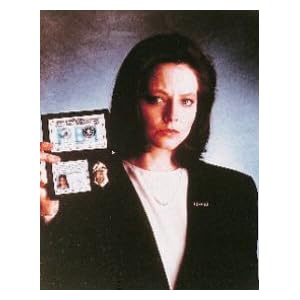
The protagonist is Clarice Starling, a young FBI agent, is assigned to help find a missing woman to save her from a psychopathic serial killer. As research into the woman’s disappearance Clarice is asked to speak to renowned killer, Hannibal Lecter as her superior officer feels he could be useful in tracking down the psychopathic serial killer, who, it transpires, is called “Buffalo Bill”.
Hannibal Lecter is highly intelligent and whilst he does help Clarice to solve the case, in his own twisted way, he also manages to make his escape which leaves the end of this film on a cliff hanger for the sequel.
A basic definition of a thriller film should be fast paced, suspenseful and contain many plot twists. The protagonist is often a male who has issues with relationships, whether it be with family or friends. A common theme within the thriller genre is death.

Plot twists have become a common feature of thrillers, so much so that it may be argued that they are no longer thrilling, as the audience has come to expect a twist of some sort. With Silence of the Lambs there are plenty of plot twists to keep the audience in suspense; the final scene being the most prolific when Clarice is alone and

Death is frequently featured in thrillers, for example: Black Swan, Inception and The Sixth Sense, to name but a few. Death is clearly a feature of Silence of the Lambs as two of the major characters are serial killers. However, Silence of the Lambs is fairly horrific in its portrayal of death as Hannibal Lecter is a cannibal and Buffalo Bill is skinning his victims to make a skin suit for himself. These ideas ought to place Silence of the Lambs more in the horror genre due to its graphic content.  


An unconventional aspect of the film, however, is that the protagonist is female. Having said that, other aspects of her character are representative of the genre: she appears to be very work focused, with no emotional ties, which also makes her appear to be a loner. She is also a member of the FBI, which is a good job within the crime sector.  
All of these things can be applied to male protagonists in other films such as . Whilst gathering research for this essay I read a piece that suggested that the film was trying to make a statement against sexism and that it was a punishable offence within the film, which would then reinforce the idea that Clarice is a typical thriller protagonist, just a female version.


Hannibal Lecter is a typical antagonist as he is highly intelligent and manipulative and thus epitomises the sinister and psychologically damaged character that is often portrayed in thrillers. He can be compared to other thriller antagonists such as The Joker from Christopher Nolan’s, The Dark Knight, as they are both examples of antagonists in thrillers and share similar traits.


The technical aspects of the film are also reflective of the genre. The use of lighting is typical of the thriller genre as it is primarily lit with low key lighting which often creates deep, dark shadows. In thriller this is done to heighten fear and suspense as one does not know what may be hiding in the darkness. The way Lecter is lit has been done with a lot of thought, particularly in the scene of Clarice's first meeting with Lecter where his face is lit from below casting very sinister shadows across his face making him look more villainous.

Having said this, there is a lot of naturalist lighting used in The Silence of the Lambs but I would suggest that this is also reasonably common within Thriller films. The natural lighting makes the scene look more real, the more real it looks the more frightening it is for the audience as they believe it's more likely to happen to them because it looks real.
  The majority of the camera shots and angles used are also stereotypically thriller. For example, the opening scene of Clarice running through the woods which is a sequence that often features in thriller films e.g.
The scene towards the end of the film of Clarice at Buffalo Bill’s house which is a point of view shot from Bill’s night-vision goggles is particularly disturbing as it adds to the fear of the unknown. This shot makes the audience feel scared for Clarice because she doesn’t know that Bill’s out there, but it also makes the audience fear for themselves because they may be watching the film in a darkened room and not be able to see what’s out there, thus creating the fear of the unknown.
To add to this, there is no music or any other non diegetic sound, mostly it is just Clarice’s heavy breathing which creates more tension as the audience is just waiting for something to happen, a gun shot perhaps?

It is questionable as to whether or not The Silence of the Lambs belongs in the psychological thriller category or not due to its high content of horrific scenes. It does deal with a cannibalistic psychiatrist and a serial killer who murders people for their skin so that he can make a woman suit so the film clearly features some eccentric psychological issues.
As shown throughout the essay, The Silence of the Lambs does fit many of the thriller criteria as well as being rich in psychological detail but due to its horrifying subject matter and the way it is portrayed on screen it would not be unfair to suggest that the film be classified as a psychological thriller/ horror film.